1. Decide your studio format first
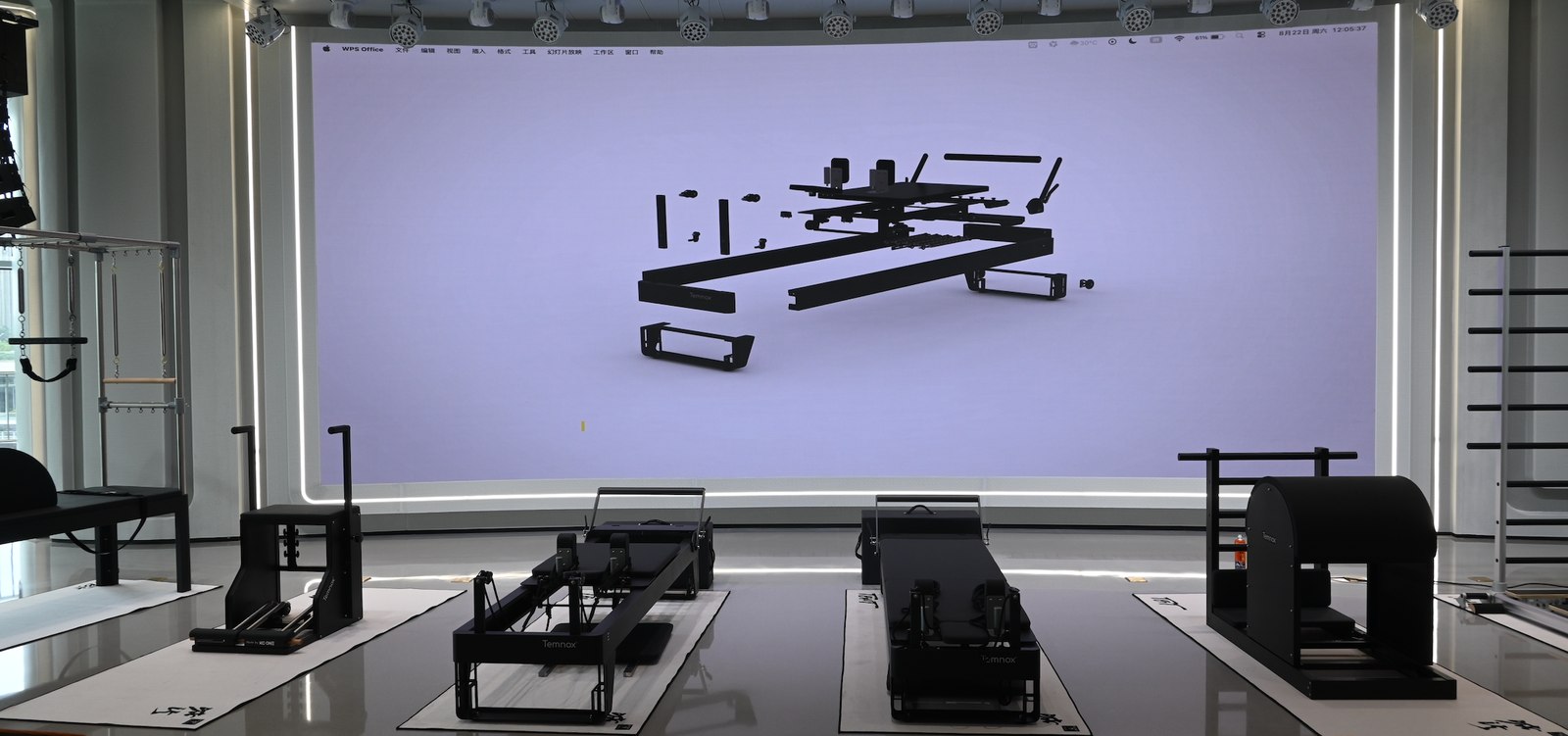
Professional Pilates equipment should be chosen around the way the studio actually operates — not only around appearance. A private training room, a group reformer studio, an instructor academy and a rehabilitation-oriented facility need different combinations of machines, quantities and accessories.
| Studio Format | Typical Class Size | Equipment Focus |
|---|---|---|
| Group reformer studio | 4–12 clients per class | Consistent reformer configurations first; chairs and barrels as supporting equipment. |
| Private / semi-private studio | 1–3 clients per session | Fewer machines, broader mix: reformer, Cadillac, Wunda Chair, barrel. |
| Hybrid studio | Group classes + private suites | A small reformer group area plus a dedicated private room with Cadillac and chair. |
| Instructor academy | Training cohorts | Reformers in matching configurations plus Cadillac and barrel for teaching repertoire. |
| Rehab / wellness facility | 1–4 clients per session | Reformers with assisted work, trapeze table and upright rehab training units. |
Defining the format first prevents the most common buying mistake: choosing attractive individual products without planning how the complete room will work. It also determines your teaching system, which can influence the models your instructors feel most confident teaching on.
2. Build the equipment mix around core training
Reformers are usually the starting point for a commercial studio because they support both group classes and private sessions. Chairs, Cadillacs, towers, barrels and spine correctors then extend the program according to floor area, budget and instructor skills. If you are comparing reformer models first, the TSH and TBH comparison sets out the differences.
| Equipment | Common Buying Intent | What To Check |
|---|---|---|
| Reformer | Core class equipment for group and private training. | Frame, carriage travel, spring system, rope, pulley, footbar positions, upholstery and capacity. |
| Wunda Chair / Pilates Chair | Compact strength, balance and control work for studios with limited space. | Handle positions, pedal stability, spring tensions, footprint and frame rigidity. |
| Cadillac / Trapeze Table | Private instruction, assisted work and advanced training. | Frame material, spring hooks, canopy stability, mat surface, accessories and setup space. |
| Tower | Wall or reformer-based spring training where floor efficiency matters. | Hook layout, spring options, mounting style, stainless components and compatibility. |
| Ladder Barrel | Mobility, extension, strength and flexibility work. | Barrel adjustment, ladder spacing, handle coating, upholstery and floor grip. |
| Spine Corrector | Spinal mobility and mat-based accessory programming. | Curve shape, leather wrap, handle position, portability and surface finish. |
| Rehab Trainer | Rehabilitation-oriented, wellness or specialty training environments. | Support rails, spring durability, movement range, user access and training scenarios. |
3. Work out how many machines the studio needs
Machine count is driven by class size and schedule turnover, not by how many machines fit in the room. A practical method for reformers:
- Decide the maximum class size you will teach (for example 6 clients).
- Plan one reformer per client in that largest class.
- Add spare capacity for maintenance, spring changes and the occasional machine out of service — most studios plan roughly one spare reformer per 4–6 in use.
- Estimate turnover: a 50-minute class with 10 minutes of reset time means each reformer is used about once per hour.
4. Plan the room before choosing the models
Equipment is only part of the plan; the room has to work around it. Confirm these points before signing a lease or finalizing an order:
- Reformer spacing: allow roughly 1.2–1.5 m between reformers for safe entry and exit during class, plus clear aisles to the door.
- Ceiling height: check that Cadillac bars and tower springs have full range of motion — low ceilings rule out some equipment.
- Floor loading: professional reformers weigh roughly 60–90 kg; confirm the floor can take the load before the machines arrive.
- Access route: check door widths, corridors and elevators, because large machines move in as packed units.
- Storage: allocate space for mats, props, spare springs and toolkits so the studio floor stays clean.
- Power and lighting: plan outlets and lighting around the class layout before installation.
5. Set a realistic budget
Professional Pilates equipment prices vary widely depending on frame material, spring quality, upholstery and whether you buy through a reseller or direct from the factory. Instead of relying on a single number, understand the cost drivers:
- Frame material: carbon steel, stainless steel and anodized aluminum differ in price, weight and corrosion resistance.
- Spring systems: the spring set is the heart of a reformer; higher-grade springs with consistent tension cost more and last longer.
- Upholstery: commercial-grade foam and vinyl hold up to daily studio use far better than home-grade materials.
- Brand vs. factory-direct: buying from the manufacturer removes reseller margins, which is why most new studios and distributors start with factory-direct quotations.
Budget for more than the machines themselves:
- Export packaging (wooden crate or protective carton) and packed dimensions.
- International freight from the FOB port with your own forwarder.
- Destination customs, import duties and local compliance checks.
- Installation, spare parts and instructor training.
6. Evaluate the manufacturer, not only the product photo
A good Pilates equipment manufacturer makes it easy to understand how the equipment is built, packed, quoted and supported after delivery. Product photos are useful, but they are only one part of the decision.
- Ask whether the supplier is selling a proprietary product line or only copying generic models.
- Request detailed specifications for frame, springs, upholstery, dimensions, weight, colors and accessories.
- Review product videos and close-up photos of moving parts, welds, pulleys, rails, padding and handles.
- Confirm whether the supplier can support studio packages, distributor orders and repeat purchasing.
- Clarify communication channels for quotation, production updates, spare parts and after-sales questions.
- Ask which training use each model was designed for — similar-looking machines can feel very different in practice.
7. Prepare the right information for a quotation
For B2B Pilates equipment orders, a fast and accurate quotation depends on the buyer's context. Instead of asking only for a unit price, prepare the order brief first:
- Product models and estimated quantities.
- FOB Shanghai or DAP quotation preference.
- Studio, distributor, chain, academy or wellness facility role.
- Preferred color options and branding needs, if any.
- Expected timeline and whether the project is urgent.
- Questions about packaging, spare parts or product videos.
8. Check export packaging and FOB handover early
Large Pilates machines are not small parcel products. Frames, upholstery, springs, accessories and moving parts need protective export packaging. KCONE quotes on FOB Shanghai or DAP terms; buyers arrange the main international freight with their own forwarder.
- Ask for wooden crate or protective export packaging details.
- Confirm whether the quotation is based on FOB Shanghai or DAP.
- Check product dimensions and packed dimensions separately.
- Confirm freight planning after port handover with your logistics partner.
- Keep videos, photos and packing information for internal approval before payment.
9. Questions buyers should ask before ordering
- Which models fit my class format and floor area?
- What are the exact dimensions, weight and material specifications?
- Which springs, handles, pulleys, ropes and accessories are included?
- What color options are available as standard options?
- What is the MOQ for this model and this destination?
- What is the current lead time and production schedule?
- How is each machine packed for export?
- How can I review product photos, videos and details before confirmation?
- What support is available for spare parts and after-sales questions?
10. Special programs and training systems
Most KCONE equipment can be used with the buyer's own Pilates training system. One exception is worth planning for early: the PowerHouse RX is an upright rehab-style trainer whose programming follows the applicable PHI Pilates authorized system. Buyers should confirm the current product and training arrangements with KCONE before including RX in a package, and the same applies to any specialized equipment with a defined training method.
Request a FOB Shanghai or DAP quotation
Send KCONE your studio format, target models, quantities, FOB Shanghai or DAP preference, timeline and usage scenario. We can review specifications, photos, videos, quotation, MOQ, lead time and export packaging before order confirmation.
REQUEST QUOTATION